
02
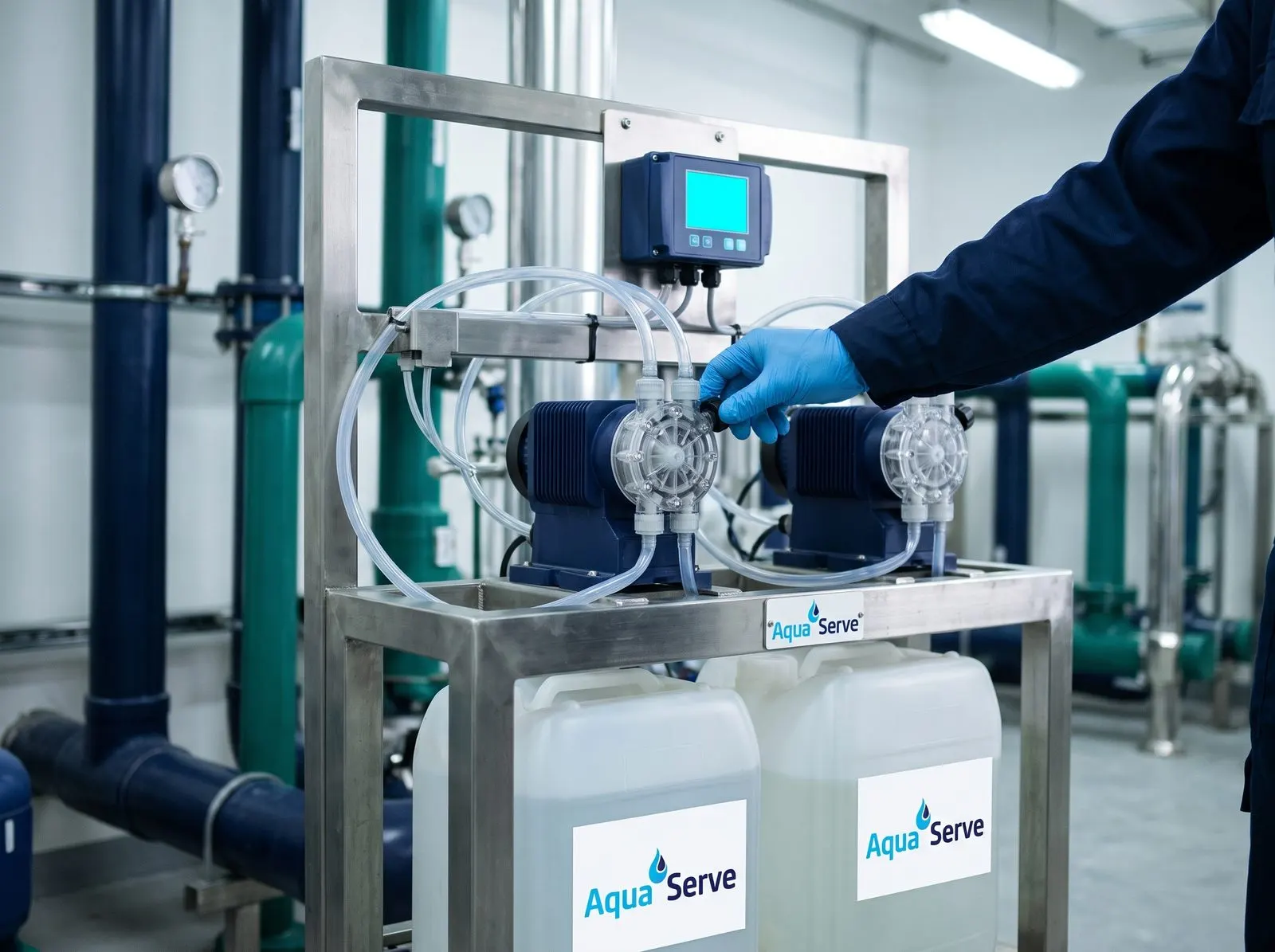
Automatic Dosing System →
Dosing pumps and controllers that add the right amount of chemical at the right time, without manual handling.
Corrosion and bacteria control for closed chilled water systems, with chemicals, dosing and testing in one programme.
Why it matters
In Qatar, chilled water systems run for most of the year. A chilled water system is a closed loop: the same water circulates between the chillers and the coils in air handling units and fan coil units. Very little water is lost, so problems build up slowly and out of sight until a coil blocks or a pipe starts to leak.
Corrosion. Steel pipework and copper coils corrode when the water is not protected. Oxygen gets in with every top-up, leak and maintenance job. The rust that forms travels round the system, blocks strainers and coats coils.
Bacteria and biofilm. Cool water does not stop bacteria from growing. They form a slimy layer on pipe walls that cuts heat transfer and speeds up corrosion underneath it.
Sludge and debris. Corrosion products and dirt left from construction settle wherever the flow is slow. They reduce flow to the far end of the building and wear out valves and pumps.
We start by testing the water and looking at how your system runs: its size, the metals in it, how often it is topped up and any problems you already have. From that we set the treatment programme.
The programme keeps a corrosion inhibitor at the right level throughout the loop and uses biocide to keep bacteria under control. We supply the chemicals and dose them either by hand or with an automatic dosing system, depending on the size of the system and how often it takes in make-up water.
On every visit we take samples and test the inhibitor level, pH, conductivity and bacteria, then adjust the dosing if the results have moved. You get a written report each time, which helps with audits and handovers.
Treatment works best on clean pipework. New systems, and old ones after major changes, should be flushed and cleaned before the treatment programme starts, so the inhibitor protects bare metal instead of reacting with dirt.
Dosing pumps and controllers that add the right amount of chemical at the right time, without manual handling.
Scale, corrosion and bacteria control for cooling towers and condenser water, with automatic dosing and bleed-off.
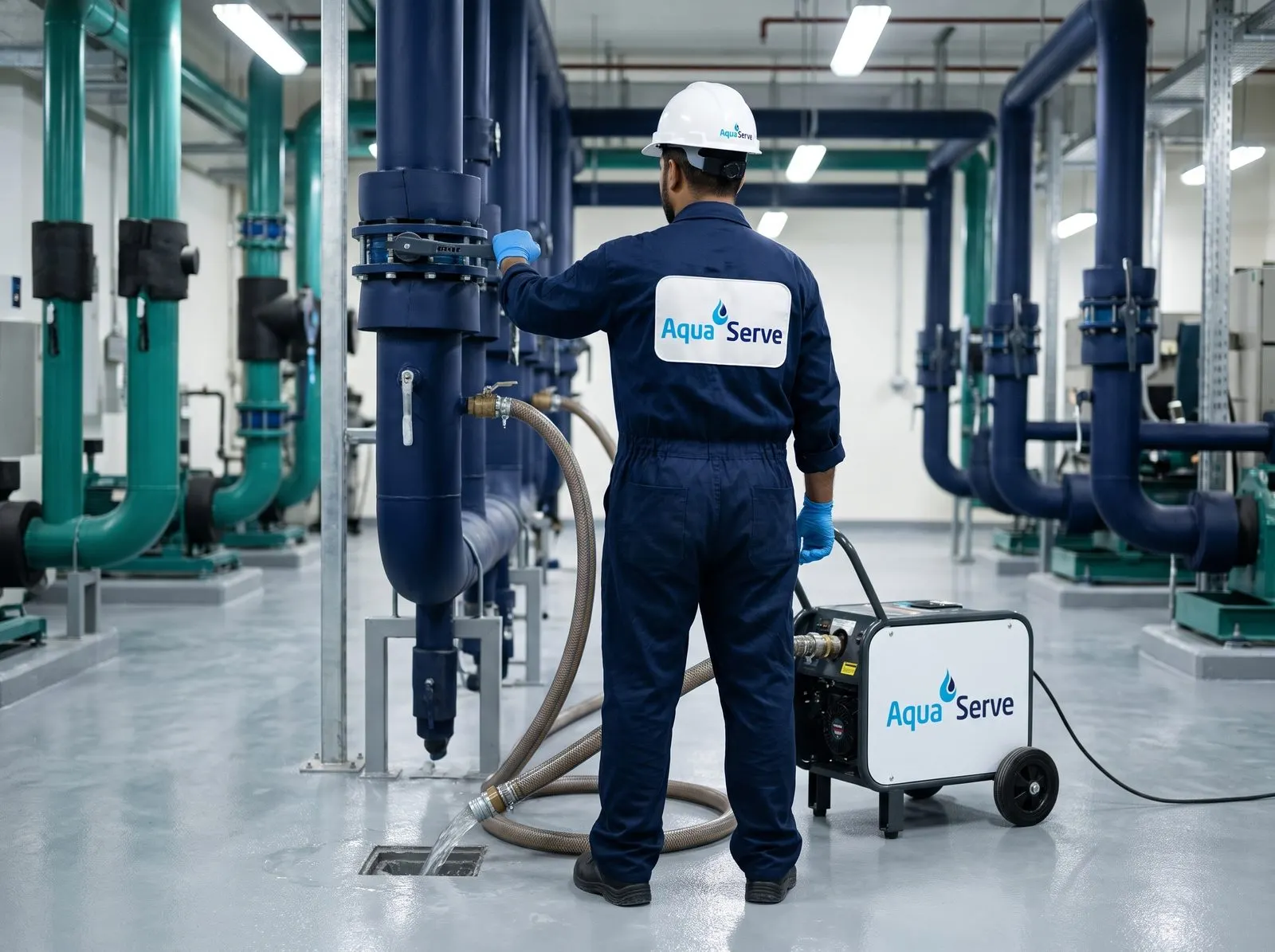
Flushing and pre-treatment of new and existing chilled and condenser water pipework.
Tell us about your system and we will arrange a site visit or a quote. Our hotline is open 24 hours.